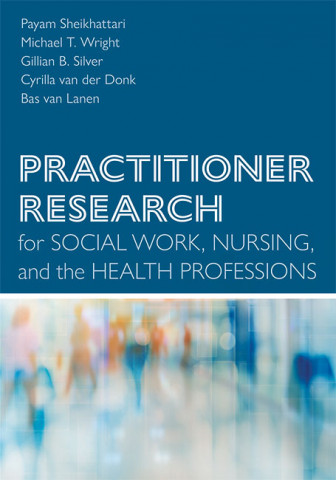
What makes a Practitioner Researcher? Exploring the Competency Framework
By Bas van Lanen
In the Netherlands and Belgium there is a growing emphasis on developing the research and innovation competencies of current and future professionals in health, nursing, social work and education. Professionals need specific knowledge, skills, and attitudes to respond effectively to contemporary challenges such as rapid technological developments, demographic shifts, and changes in government policy, including the increasing decentralization of funding.
Professionals are expected to apply scientific knowledge and combine it with other sources of knowledge to identify and analyze problems and questions in their own professional settings. By doing so they generate context-specific knowledge and develop solutions that fit the specific context of their professional practice. As a result, they are better prepared to respond to the challenges of tomorrow.
Research as a Driver for Professional Growth
As a lecturer in the Master of Social Work program in the Netherlands, I have seen how practitioner research contributes to the professional growth of my students and strengthens the learning capacity of the stakeholders involved in their research projects. Students use their professional positions to bring together different perspectives and sources of knowledge and increasingly experience their professional practice as a valuable learning environment. They discover that bringing together perspectives from research literature, clients, colleagues, and other stakeholders leads to new insights for both themselves and the people directly involved. As practitioner researchers they can act as catalysts for collective learning and development.
Practititioner Research Competencies
In Dutch higher education, integrating practical research skills and innovation skills into the curriculum is widely regarded as an important way of preparing students for future challenges (Netherlands Association of Universities of Applied Sciences, 2026; Onderwijsraad [Dutch Education Council], 2014). As a result, practitioner research has become an integral part of many courses that prepare students for professional practice. The related competencies are reflected in program profiles, professional standards, and qualification frameworks.
I have been involved in many projects integrating practitioner research and innovation into the curriculum. The insights gained from this work have informed the development of a Practitioner Research Competency Framework. The framework has been used by higher education institutions in the Netherlands and Belgium for several years to support the design of practitioner research curricula and related courses. Members of our practitioner research network have translated and adapted the framework for an international audience, enabling institutions around the world to use it in their own educational contexts.
References
Netherlands Association of Universities of Applied Sciences. (2026). Practice-based research: The engine of change. Strategic research agenda for universities of applied sciences 2026–2030. https://www.vereniginghogescholen.nl
Onderwijsraad. (2014). Meer innovatieve professionals [More innovative professionals]. https://www.onderwijsraad.nl/documenten/2014/11/25/meer-innovatieve-professionals
Bas van Lanen is a researcher and lecturer for research methods and practice development in the Master of Social Work program at HAN University of Applied Sciences Nijmegen (The Netherlands).
↗ Share on LinkedIn