Who Gets to Ask the Research Question?
By Payam Sheikhattari
Who gets to ask the research question? In most of health care and social work, the answer is someone far from the practice. The question is written at a university. The study runs in a clinic or a neighborhood. The findings come back years later as a guideline. The people who did the work were a sample, or an audience.
Practitioner research turns that order around. A nurse, a social worker, or a community health worker starts from a problem in their own practice. They shape the question, run the inquiry inside their own service, read the results with colleagues and clients, and change the practice. Improvement is the outcome. The publication serves it.
I came to this method through community-based participatory research in Baltimore. For more than nineteen years, residents of East Baltimore have worked with us as co-researchers on tobacco cessation, from the first question to the last decision. The lesson is simple to say and hard to do. Evidence made by the people who will use it gets used.
The gap
Health fields measure the distance between a discovery and its use in practice in years. Evidence-based practice moves findings from research into practice, and it travels slowly, because the people who produced the evidence are far from the people who must apply it. Practice-based evidence moves the other way. When the person producing the evidence is the person who can act on it, the gap closes. Dissemination becomes the work itself.
The cycle
The method runs in seven steps: orientation, focusing, planning, data collection, analysis and conclusion, design and innovation, documentation and presentation. The step most projects skip is focusing: one practice problem, one question a team can answer in the time it has. The step that sets practitioner research apart from research that ends in recommendations is design and innovation. The conclusions become a changed practice, and the team tries it.
What good looks like
Did the practice improve? Was the inquiry sound, and did the team learn? Did everyone affected have a real voice? Did the work leave the team more able and more willing to study its practice again? Four questions. Most projects answer only the first. Strong ones answer all four.
Why it matters now
Clinicians and social workers do not become researchers by taking courses about other people’s studies. They become researchers by running a rigorous study inside their own practice, with structure and mentors around them. That is also how a working professional advances a field without leaving practice for a university.
If you work in a practice and carry a question you cannot put down, that is the beginning. The method supplies the rest.
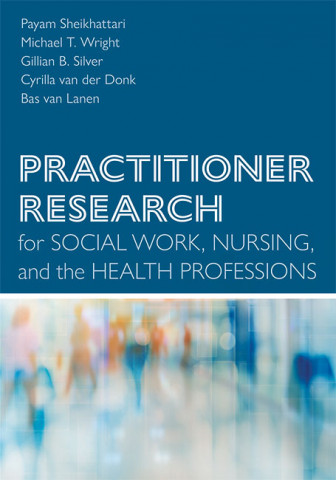
Payam Sheikhattari is Professor of Public Health at Morgan State University in Baltimore and founder of Morgan CARES, a community research network. He is one of the authors of Practitioner Research for Social Work, Nursing, and the Health Professions (Johns Hopkins University Press, 2022).
↗ Share on LinkedIn